Thursday, April 27, 2023

Soft Skills for Business Analyst || Soft Skills

SOFT SKILLS FOR BUSINESS ANALYST; 


Being a Business Analyst is a demanding position that necessitates a diverse range of abilities, both technical and non-technical. While technical skills like data interpretation, requirements collection, and software expertise are essential, non-technical skills such as effective communication, collaboration, and analytical thinking are equally significant. Among these non-technical skills, two that emerge as exceptionally crucial for Business Analysts are Efficient Time Management and Astute Critical Thinking. In this blog, we will delve into why these abilities are so fundamental and how Business Analysts can hone them.

TIME MANAGEMENT;

Efficient time utilization involves arranging and strategizing the duration spent on different tasks. In Business Analysis, this implies the capability to juggle several duties and priorities, establish feasible deadlines, and distribute time proficiently. Business Analysts require exceptional time management abilities as they are frequently in charge of overseeing intricate projects with strict time constraints. If a Business Analyst fails to handle their time efficiently, they may miss deadlines, lead to setbacks, and jeopardize the triumph of the project.



To enhance your time management abilities, there are various approaches you can adopt. Firstly, you can prioritize your duties and give emphasis to the most crucial ones initially. This will guarantee that you are advancing in the key aspects of the venture, even if you are running short of time to finish everything. Secondly, you can divide bigger tasks into smaller, more achievable chunks, which will prevent you from getting stressed out. Lastly, it is vital to establish practical deadlines for yourself and your team and to communicate them unambiguously to all stakeholders.

CRITICAL THINKING;

The process of examining information objectively, assessing various perspectives, and forming informed judgments is known as critical thinking. In the realm of Business Analysis, critical thinking entails the ability to analyze intricate issues, pinpoint underlying causes, and devise feasible solutions. For Business Analysts, sound critical thinking abilities are indispensable as they must provide sound recommendations based on thorough data and analysis.


To enhance your critical thinking expertise, you can apply several methods. One of them is to adopt a systematic approach to problems, breaking them down into smaller components and evaluating each individually. Another approach is to consider various viewpoints and possible solutions, assessing the advantages and disadvantages of each alternative. Finally, it is crucial to remain receptive and willing to modify your analysis and suggestions based on fresh information.

CONCLUSION;

Effective time management and analytical thinking are two of the most crucial soft skills for professionals working as Business Analysts. Proficient time management abilities are indispensable for handling intricate projects with strict deadlines, while analytical thinking skills are vital for scrutinizing information impartially and taking well-informed decisions. By giving importance to these skills and implementing the tactics mentioned above, Business Analysts can improve their competence to efficiently manage projects, analyze problems, and provide substantial benefits to their clients and stakeholders.

Sunday, April 2, 2023

Math and Agriculture: Exploring the Connections

 The field of mathematics

                                                            is an influential instrument that has extensive applications in various domains, such as agriculture. If you hold a degree in mathematics and have a keen interest in utilizing your expertise in agriculture, there are numerous avenues to explore. In this article, we will delve into several ways in which mathematics can be employed in agriculture, ranging from the math used in ancient Egypt to contemporary problem-solving techniques.


Egyptian Math for Agriculture;

For centuries, agriculture has relied on mathematics. The utilization of math in agriculture dates back to ancient times, with one of the earliest recorded examples coming from Egypt. The ancient Egyptians employed a measuring system that was based on the cubit, or the length of one's forearm, as well as a fractional system that enabled them to divide their fields into smaller portions for more effective farming. By utilizing math to measure and divide their land, the ancient Egyptians were able to boost their agricultural yield and accommodate a growing population.

Agriculture Mechanics;

                                                       Mathematics proficiency is also beneficial in the field of agricultural engineering. Agricultural engineering pertains to the utilization of mechanical concepts in farming contrivances, such as ploughs, reapers, and watering systems. Agricultural engineers apply mathematical techniques to plan and enhance these mechanisms for optimal effectiveness and output. To illustrate, they may use differential calculus to simulate the movement of water in an irrigation system and ascertain the ideal amount of water to supply to every crop.

Agriculture Math and Problem Solving;

                                                                                          Mathematical proficiency is a skill that is highly beneficial in the agricultural industry, particularly in the field of problem-solving. Agricultural experts and farmers are frequently confronted with intricate issues that necessitate mathematical analysis and modeling to arrive at a solution. For instance, a farmer may need to calculate the ideal planting density for a specific crop, taking into account variables such as soil quality, weather conditions, and other factors. Through the application of mathematical models and analysis, farmers can make informed decisions regarding crop management.


Ways to Use a Math Degree in the Agriculture World;

If you have a math degree and are interested in applying your skills to the agriculture world, there are many career paths you can explore. Here are just a few examples:

  • Agronomy Engineer: In the capacity of an agronomy engineer, you will apply engineering and mathematical concepts to develop and enhance agronomy systems, such as farm equipment, crop storage structures, and irrigation systems.
  • Agronomist: Agronomists apply scientific and mathematical principles to research plant and animal biology, soil science, and various other aspects of agriculture. Their objective may be to create novel crop strains, enhance soil fertility, or establish eco-friendly farming methods.
  • Data Analysts: Data Analysts are highly sought after in various fields, including agriculture. As an information specialist, you would utilize mathematical and statistical analysis to analyze and decipher agricultural information, such as harvest productivity, soil specimens, and atmospheric data.


To sum up, there is a stronger correlation between mathematics and agriculture than one may assume. From the mathematics of ancient Egypt to contemporary troubleshooting, mathematical abilities are useful in various fields of agriculture. If you possess a degree in mathematics and are keen on utilizing your expertise in the agricultural sphere, there are numerous career opportunities to consider.

Thursday, March 30, 2023

Presenting the AI directly on your screens

You may have used Artificial Intelligence in your daily life Job works, Schools/ Curricular works or even maybe in your daily life somehow.

But Here is something new and latest that You never have heard or even maybe never imagined . Yes, Here is Sana, the first AI news anchor made by India launched a few hour ago on India Today, News channel. 

"She is bright, gorgeous, ageless, tireless, speaks multiple languages and is completely under my control.

said India Today's Vice Chairperson, Kalli Purie

Sana : World's First AI news anchor


Kalli Purie, Vice-Chairperson of India Today, launched Aaj Tak's first AI anchor Sana during the 20th edition of India Today Conclave, which kicked off on Friday. Purie described Sana, "She is bright, gorgeous, ageless, tireless, speaks multiple languages and is completely under my control." The first AI anchor will be updating us with the daily news several times a day in multiple languages from this week onwards.

She said that Sana will present each relevant news and topic daily and do a show with a question and answer show for the audience to enhance the interaction.

Talking about the innovations she further added, "Sana does not take away from the brilliance of real-life anchors, who will be mentoring her. Sana will have a human surrogate editor and hopefully company soon"

Purie further stated that this partnership is anticipated to unveil innovative wonders, and it is not a contest between individuals and artificial intelligence. She remarked, "The future is intriguing and alarming, and it has arrived." Addressing the persistent criticism directed towards media for displaying partiality, Kalli Purie acknowledged the influence that external forces exert on media. Nevertheless, she emphasized that India Today has always maintained the integrity of their narratives, stating, "Our reliability holds significance for us."

Brad Smith, the President and Vice-Chairperson of Microsoft, along with other distinguished individuals, expressed their views on AI. According to Smith, AI has the potential to become as significant as the internet. He also anticipated the emergence of Generative AI in Indian government services and businesses, which would provide novel methods for citizens to obtain information. During his conversation with India Today and Rahul Kanwal, Director of Aaj Tak news channel, Smith delved into the advantages and disadvantages of Generative AI.


More to know

AI

India

India AI

World's first AI news anchor

AI in journalism

Journalism

The Future of AI

Saturday, March 25, 2023

Linear Algebra in Data Smoothing


   What is Data Smoothing?
                        Smoothing data is a statistical method that eliminates disturbances and extracts fundamental patterns from a data set. Linear regression is one of the most widely used methods for data smoothing, which includes fitting a straight line or a curve to the data points. In this article, we will delve into the application of linear algebra in data smoothing.
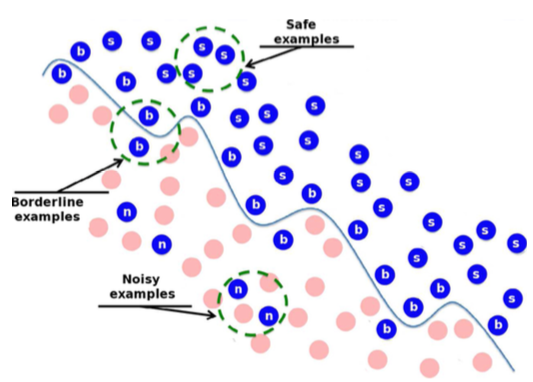
Figure; A Noisy Data

            While before proceeding, let's learn about some other techniques and methods.

Linear Regression;

                            Linear regression is a technique that models the correlation between two variables by fitting a linear equation to the observed data. The purpose of linear regression is to identify the straight line or curve that best corresponds to the data points, enabling us to predict or estimate the value of the dependent variable for a given value of the independent variable.

Matrix Representation;

                             Linear regression can be represented as a matrix equation. This involves determining the coefficients of the linear equation that minimize the sum of the squared deviations between the projected and actual values. The matrix representation of linear regression involves representing the independent variable as a matrix, and the dependent variable as a vector. The coefficients of the linear equation are then calculated using matrix operations, such as matrix inversion or singular value decomposition.

Regularization;

                             Regularization is a data smoothing technique that prevents overfitting, a situation in which the model fits the noise in the data instead of the fundamental trend. Regularization involves adding a penalty term to the cost function that penalizes large coefficients and encourages simpler models. L1 and L2 regularization, also known as Lasso and Ridge regression, respectively, are the most popular types of regularization used in linear regression.


Applications of Linear Algebra in Data Smoothing; Linear algebra is used in several data smoothing applications, such as:

  1. Time series analysis: The mathematical discipline of linear algebra is employed to represent the tendencies and configurations in chronological sequence information, like the values of stocks and meteorological data.
  2. Image processing: The examination of numerical structures and methods, referred to as linear algebra, is implemented to analyze and enhance signals, encompassing but not restricted to sound signals and detector information.
  3. Signal processing: The study of mathematical structures and techniques, known as linear algebra, is applied to scrutinize and refine signals, including but not limited to audio signals and sensor data.
  4. Machine learning: Numerous machine learning algorithms, such as linear regression, support vector machines, and principal component analysis, utilize the principles of linear algebra.


Closing Remarks;
To sum up, linear algebra plays a crucial role as a mathematical instrument in the process of data smoothing. Approaches like linear regression, matrix representation, regularization, and other tactics of linear algebra are employed to eradicate unwanted signals and detect the fundamental patterns in datasets. By attaining mastery over linear algebra, data scientists can create effective data smoothing solutions and gain knowledge about intricate phenomena.

Soft Skills for Business Analyst || Soft Skills

SOFT SKILLS FOR BUSINESS ANALYST;   Being a Business Analyst is a demanding position that necessitates a diverse range of abilities, both te...